Fabric vs. Paper Bunting: Which Lasts Longer for Outdoor Parties?
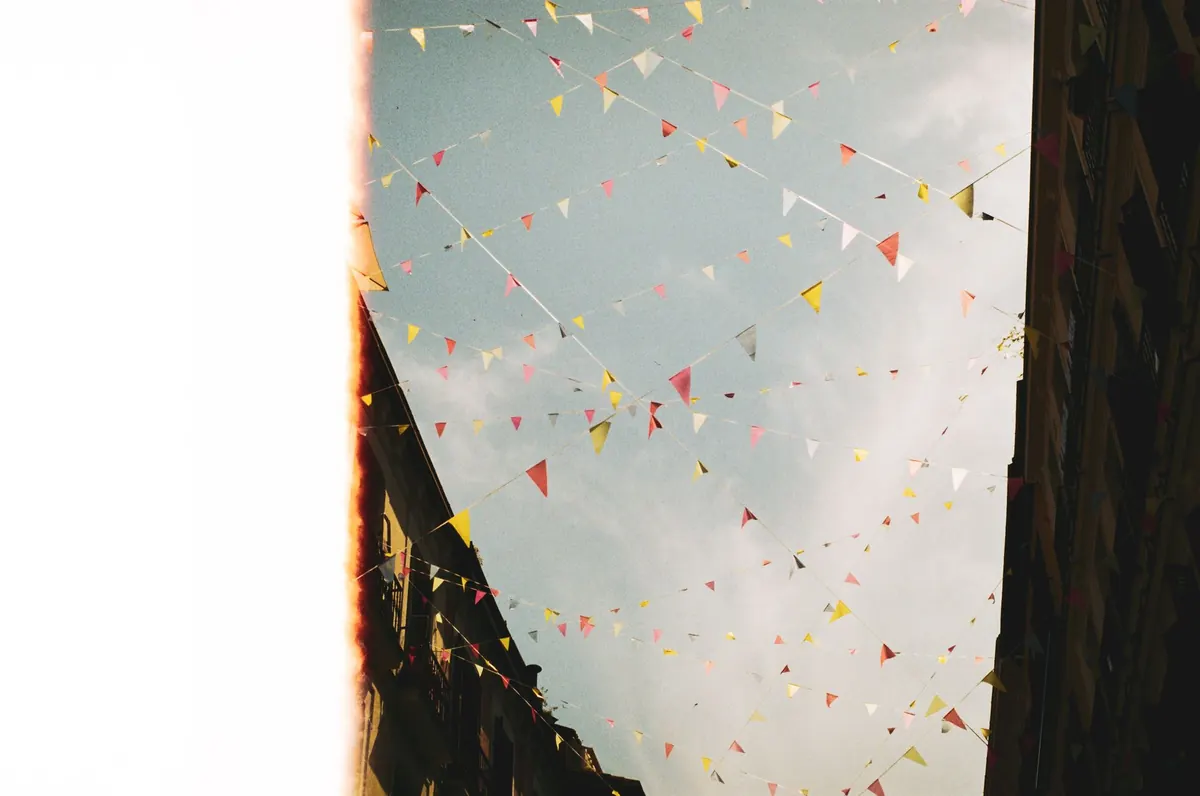
You string bunting across the garden, the guests arrive, and then the sky opens. Twenty minutes later you are peeling wet paper flags off a fence while the fabric strip beside it drips quietly and keeps its shape. That moment explains most of the difference between the two materials: they do not fail at the same speed, and they do not fail for the same reasons.
Neither one is the correct answer for every outdoor party. What matters is how much weather you are asking the bunting to survive, how often you plan to reuse it, and how much patience you have at eleven o'clock at night when the party ends.
How Each Material Handles Rain, Sun, and Wind
Paper bunting — cardstock triangles, waxed paper, printed sheets cut into pennants — is a dry-weather decoration. A light drizzle leaves it limp and wavy. A real shower turns it to pulp, and the ink usually runs first, onto whatever sits behind it: a white wall, a tablecloth, the side of a hired marquee. Coated or laminated paper buys you a few extra minutes, nothing more. Once water reaches the fold where the string passes through, the flag tears.
Heat works more slowly. Cardstock curls at the corners in humid air and never flattens again. Direct sun fades dye within a season, and wind is the quiet destroyer: paper flags catch air, pull hard on the line, and enlarge the punched holes until a flag slips free.
Fabric's weak spots
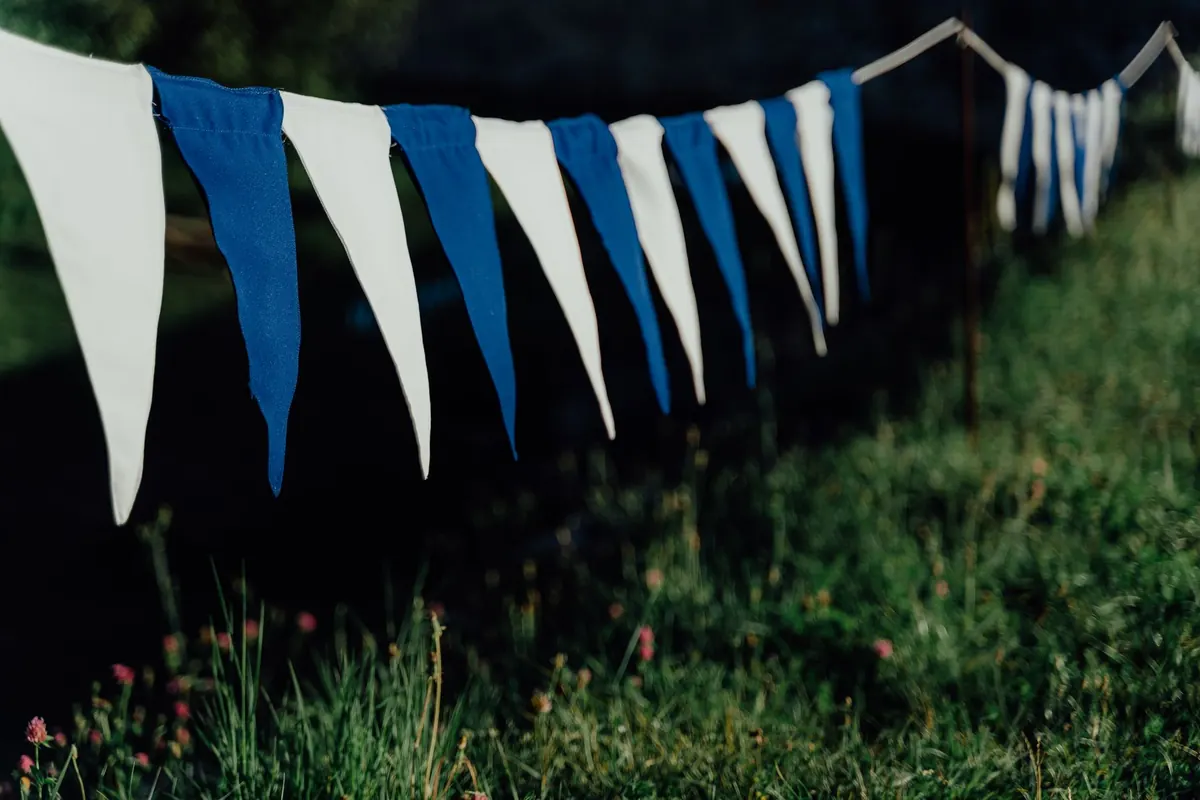
Fabric is far more forgiving, but "fabric" covers a wide range. Cotton soaks up water, becomes heavy, and sags between fixing points — heavy enough to pull a hook out of a fence post. Left damp in a bag, cotton mildews, and that smell does not wash out. Polyester, nylon and oilcloth (coated cotton) shed most rain and dry within minutes in a breeze. Prolonged direct sun will eventually fade any dyed textile, with cotton fading fastest and polyester holding colour longest.
A small trick helps both materials: hang the line under an eave, a pergola or the lip of a marquee, and give it a gentle downward slope so water runs off one end instead of pooling at the lowest flag.
Reuse: What Still Looks Good Next Season
Paper bunting is a single-event item outdoors. Indoors you might get two or three uses if you store it flat and avoid creasing, but the flags will show pin holes, faded edges and the slight warp that comes from damp air. It cannot be repaired in any meaningful way — a torn paper flag is finished.
Fabric earns its keep through repetition. A cotton or poly-cotton set that gets rained on, washed, dried and ironed will come back looking close to new, and a well-made set can be pulled out for years. Fabric also tolerates repairs: a frayed edge can be re-hemmed, a snapped string can be replaced, a stained flag can be swapped out or used at the back.
Cost, Counted Per Party Rather Than Per Metre
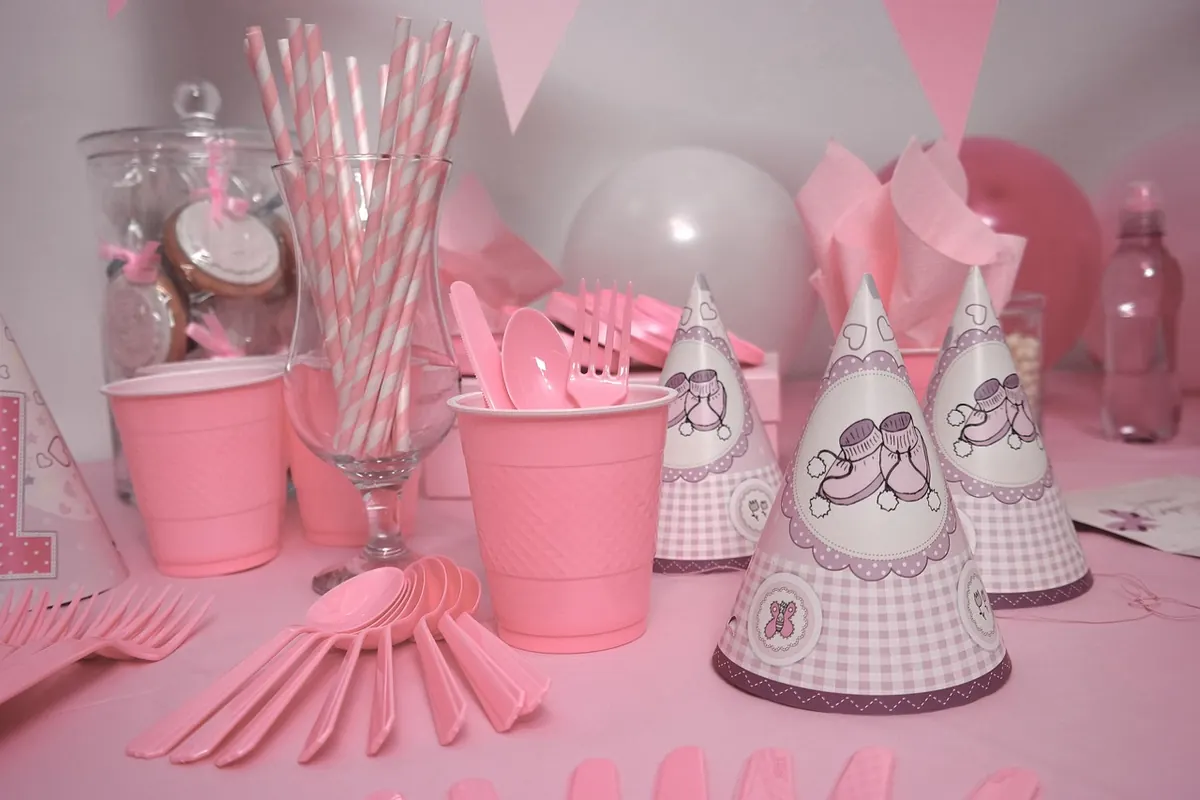
Paper is cheaper to buy and much cheaper to make yourself. If you are decorating one birthday, or a market stall for a single weekend, paper is the sensible spend. The calculation changes when you host regularly.
Rather than comparing the price tag on the day, divide it by the number of events you expect to use it for. A fabric set costs more upfront, but if it appears at three or four parties a year for several years, the cost per party drops well below paper — and you stop losing an afternoon to cutting and stringing triangles every time. Fabric does carry a hidden cost: washing, drying and ironing before each use. Budget that time honestly. If you know you will never iron anything, choose polyester or oilcloth, which hang out most creases on their own.
Packing, Storage and Transport
This is where paper quietly loses ground for anyone with a shed, a garage or a car boot.
- Paper needs a rigid, flat box. Fold it and you get crease lines that catch the light. Stack anything heavy on top and the flags crumple. Damp storage — an unheated shed, a garage floor — will ruin it between seasons.
- Fabric folds or rolls into a cotton tote and takes up about the space of a folded jumper. It travels well, survives being squashed under a pram, and can be shaken out on site.
- Both should be completely dry before storage. This matters more than anything else you do. Damp bunting in a sealed bag is how mildew starts.
- Natural fibres stored long-term benefit from a breathable bag rather than plastic, and from being kept away from damp concrete walls.
Matching the Material to the Party
Most outdoor celebrations call for a mix rather than a single winner:
- Exposed, high, weather-facing lines — across a garden, between trees, along a fence: fabric, ideally polyester or oilcloth.
- Sheltered accents — inside a marquee, under a porch, along a cake table: paper is fine and often cheaper, and paper gives you crisp printed patterns that fabric rarely matches.
- One-off events — a single christening, a market stall, a photo shoot: paper, unless you already own fabric.
- Repeat hosts and community groups — schools, village halls, anyone decorating the same field every summer: fabric pays for itself and saves the annual craft session.
- Windy sites — coastal gardens, rooftops, open fields: fabric, weighted at the ends, and fix it with something more reliable than tape.
Buy for the party after this one, not just for the one on Saturday.
Practical Care Before and After the Event
- Check the forecast the morning of the party and move paper bunting indoors if rain is likely.
- Fix bunting to sturdy points — hooks, screws, zip ties, guy lines — rather than relying on tape or pins.
- Bring fabric in overnight if heavy dew or rain is expected, even if it is "waterproof".
- Rinse food and drink spills promptly in cool water; sugar and fruit juice set into stains if left.
- Dry fabric fully on a line or airer before folding. Pat paper dry and lay it flat if it gets caught in a shower.
- Iron cotton on a medium setting before the next event, or hang it in a steamy bathroom for creases to drop.
The Answer Depends on How Often You Say Yes
For a single outdoor party with a good forecast, paper bunting does the job attractively and cheaply, and you can recycle it afterwards without guilt. For anything you expect to use again — or anything that will be strung up where rain and wind can reach it — fabric lasts dramatically longer and costs less each time it appears.
If you are undecided, buy one fabric set in a neutral colour that suits every theme, and use paper for the accents that carry the party's specific colours. That way the expensive part survives, the cheap part changes with the theme, and nothing ends up in the bin on Monday morning.
Photo: David Bartus / Pexels

You Might Also Like
A practical local guide to borrowing or renting community bunting, checking it before you take it home, and storing it so it survives to the next festival.
Windy gardens punish flimsy bunting. Here is how to choose weatherproof flags, anchor them properly, and space lines so they stay up.