Seasonal Bunting Guide: How to Decorate for Spring, Summer, Fall, and Winter Parties
Bunting earns its keep because it changes a room in about ninety seconds. One strand across a doorway tells guests where the party starts; three swagged over a table make a plain backyard look deliberate. But the same red-and-white triangles that feel crisp in July can look tired in November. Season is the easiest variable to plan around and the cheapest to get right, especially if you sew your own strands or buy sets you can mix and match.
Choose the Fabric Before the Color
Hang a cotton flag outdoors through a July rainstorm and you will understand why fabric matters as much as palette. Cotton and linen are lovely indoors, drape softly, and take dye beautifully, but they absorb moisture, sag, and fade. For anything staying up a week or more outside, reach for ripstop nylon, oilcloth, marine canvas, or a polyester blend. They shed water, hold color, and weigh almost nothing.
- Indoors, one event: crepe paper, tissue, light cotton
- Indoors, reusable: quilting cotton, chambray, linen, flannel, felt
- Outdoors: ripstop nylon, oilcloth, marine canvas, laminated cotton
- Windy spots: heavier canvas with double-stitched corners and metal grommets
Finishing details that decide how long it lasts
Pinking shears slow fraying but do not stop it; a narrow zigzag stitch or a French seam does. Bias binding along the top edge keeps a strand from curling into a rope, and a small loop at each end gives you something to tie besides the fabric itself. If you buy ready-made bunting, check the top edge first. That is where cheap strands fail.
Spring: Pastels, Light, and a Little Whimsy
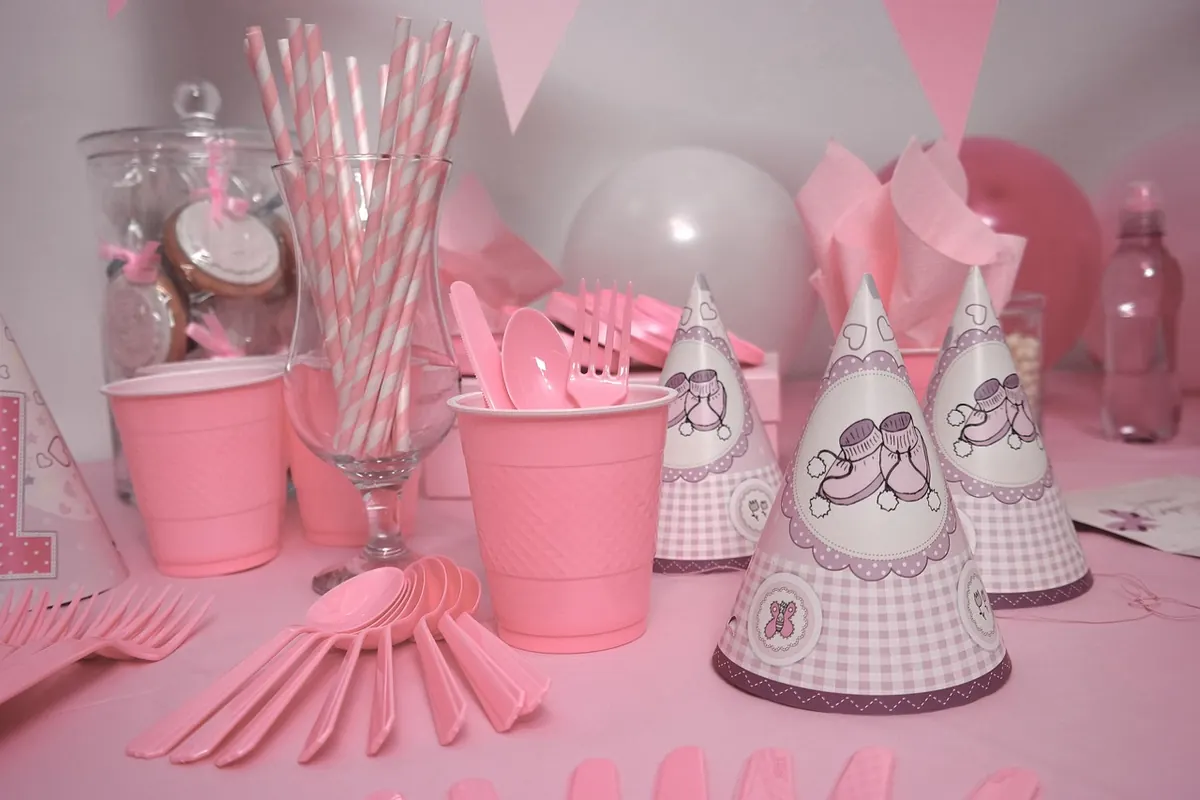
Spring palettes work when they are gentle but not washed out: blush, mint, butter yellow, lilac, sky blue, and plenty of white. Add one deeper note — soft coral or sage green — so the pastels have something to sit against.
Motifs: cherry blossom, tulips, eggs, bunnies, butterflies, raindrops, small gingham checks. Cotton lawn and chambray drape well indoors; for a garden party, layer a pastel strand over a plain white one to give the whole arrangement depth. Spring events often start outside and move in when the weather turns, so keep a shorter strand ready for the dining room.
Summer: Saturation and Sunlight
Summer is the season for bold, high-contrast color: coral, turquoise, lemon, watermelon pink, navy, and a lot of white. Nautical combinations of red, white, and navy never look dated, and a citrus palette of orange, lime, and yellow reads instantly from across a yard.
Motifs: citrus slices, popsicles, suns, palm fronds, sailboats, anchors, stripes. This is where outdoor performance counts, so nylon and oilcloth are worth the extra cost. Hang strands with a slight sag between tie points rather than pulling them tight; a taut line catches wind like a sail.
Keep bunting clear of grills, fire pits, and candles. Synthetic fabrics can melt, and cotton burns. If you are stringing bunting along a light strand, use clips instead of weaving flags through hot bulbs.
Fall: Texture Does the Work
Fall asks for warm, muted color and materials with visible weave. Think rust, mustard, olive, plum, burnt orange, and cream, with brown or charcoal as the anchor.
Motifs: oak and maple leaves, acorns, pumpkins, wheat, plaid and flannel patterns. Burlap, flannel, cotton canvas, and wool-blend felt are the natural choices. Plain untreated burlap sheds and carries a feed-sack smell in a closed room, so use washed or lined burlap, or save it for the porch. Felt holds its shape without fraying, which makes it ideal for leaf and acorn shapes that need a crisp silhouette. Layer three strands of different widths — narrow burlap, medium plaid, wide solid — for a collected look rather than a matched set.
Winter: Layer Warmth With a Little Shine
Winter palettes split into two moods. The holiday version runs deep red, forest green, cream, and gold. The post-holiday version stays in ice blue, silver, white, dove grey, and soft navy.
Motifs: snowflakes, evergreens, mittens, stars, candy canes, plaid taffeta. Velvet, wool, felt, satin, and taffeta all work here, and this is the one season where a bit of sheen genuinely helps, especially in rooms that go dark by four in the afternoon. Mix matte wool with a satin ribbon and you get depth without glitter.
If the bunting will stay up through January, skip the reindeer and candy canes and keep a plain snowflake-and-star strand instead. It still looks right after the tree comes down.
Storage Between Seasons
Most bunting dies in a box, not on a wall. A little care adds years.
- Let it dry completely. Outdoor strands collect dew and trap it in the folds. Hang them indoors overnight before packing.
- Spot clean rather than wash. Most cotton and canvas can be hand washed in cool water with mild detergent, then air dried flat. Felt, oilcloth, and anything stiffened should be spot cleaned only.
- Press before you pack, not before you hang. A warm iron on the back of cotton and linen means next season's setup takes minutes instead of an hour.
- Fold, do not knot. Coil each strand into a loose loop and tie it with scrap fabric or twine. Loose loops come out without tangling.
- Use breathable containers. Cotton, linen, wool, and burlap need air. Clear bins with a few vent holes, or cotton storage bags, beat vacuum-sealed bags for natural fibers. Add a cedar block or lavender sachet for wool and felt.
- Avoid extremes. A closet shelf is ideal. Damp basements and hot attics ruin dye and set permanent creases.
- Label by season and length. Writing "Fall — 3 strands, 10 ft" on the lid saves unpacking the wrong box in October.
Build One Base Strand and Swap the Rest
You do not need four full sets. Sew one long strand in a neutral — natural linen, cream cotton, or plain white — and treat it as the foundation. Then make or buy only a handful of seasonal flags to clip on: pastel florals in spring, citrus in summer, leaves in fall, snowflakes in winter. Small wooden pegs make the swap easy and leave no pin holes.
That approach costs less, stores in a single shoebox, and lets you dress a room for a new season in a few minutes. Start with a strand long enough to clear your most-used doorway — twelve to fifteen feet covers most — and build the seasonal pieces from there.
Photo: Sergey Platonov / Pexels
You Might Also Like
A practical local guide to borrowing or renting community bunting, checking it before you take it home, and storing it so it survives to the next festival.
Windy gardens punish flimsy bunting. Here is how to choose weatherproof flags, anchor them properly, and space lines so they stay up.